
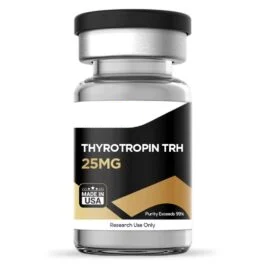
Thyrotropin TRH (25mg)


£65.35
Size: 10mg
Contents: Thyrotropin Peptide (Protirelin)
Form: Lyophilized powder
Purity: >99%
SKU: P-THYROTROPIN
FREE Shipping on £200+ orders
Thyrotropin Peptide, also known as Protirelin, is a synthetic TRH (thyrotropin-releasing hormone) analog widely studied in thyroid function, endocrine signalling, neuroendocrine regulation, and neurological research models. Researchers commonly use it to investigate TSH release, hormone regulation pathways, and central nervous system activity.
Buy Thyrotropin Peptide UK | Protirelin TRH Research Peptide
Buy Thyrotropin Peptide UK, also known as Protirelin, is a high-purity thyrotropin-releasing hormone (TRH) analog supplied by Peptide House UK for laboratory research purposes only. Researchers widely study this peptide for its role in endocrine signalling, thyroid regulation, and neuroendocrine communication pathways.
Importantly, Thyrotropin Peptide serves as a valuable research tool for investigating how TRH influences thyroid-stimulating hormone (TSH) release and downstream hormonal activity. Therefore, it remains a key compound in modern thyroid and endocrine research models.
Why Researchers Choose Thyrotropin Peptide
Researchers frequently select Thyrotropin Peptide because it provides a well-characterised model for studying hormone signalling within the hypothalamic-pituitary-thyroid axis. In addition, its established biological activity makes it highly relevant in both endocrine and neurological research environments.
Furthermore, scientists continue to investigate its influence on neurotransmitter systems, metabolic regulation, and neuroendocrine communication pathways.
- Thyroid hormone regulation studies
- TSH release investigations
- Neuroendocrine signalling research
- Neurological pathway analysis
- Metabolic regulation models
Mechanism of Action (Research Context)
Thyrotropin Peptide interacts with TRH receptors located within the pituitary gland. As a result, researchers study how this interaction influences intracellular signalling pathways and stimulates the release of thyroid-stimulating hormone.
Subsequently, TSH acts on the thyroid gland and influences the production of hormones such as T3 and T4. Consequently, researchers use Thyrotropin Peptide to explore endocrine regulation and hormone-mediated physiological responses.
- TRH receptor activation studies
- TSH release research
- Endocrine signalling investigations
- Hormonal feedback pathway analysis
Key Research Applications
1. Thyroid Function & Hormonal Regulation Research
Researchers commonly study Thyrotropin Peptide in thyroid-related models. For example, they investigate how TRH signalling influences TSH release and downstream hormone production.
Additionally, these studies help researchers better understand endocrine balance and metabolic regulation processes.
- TSH stimulation studies
- Thyroid hormone pathway research
- Hypothalamic-pituitary-thyroid axis models
- Endocrine regulation investigations
2. Neuroendocrine Signalling Studies
Thyrotropin Peptide is also widely investigated in neuroendocrine research. In particular, researchers examine how TRH signalling interacts with central nervous system pathways.
Therefore, it remains relevant for studies exploring communication between hormonal and neurological systems.
- Neuroendocrine communication research
- Hormone-neuron interaction studies
- Central regulatory pathway analysis
3. Neurological Research Applications
Researchers continue to explore Thyrotropin Peptide within neurological models because TRH analogs may interact with neurotransmitter systems. Furthermore, studies investigate pathways associated with dopamine and serotonin activity.
Consequently, this peptide is frequently included in broader neurochemical and behavioural research programmes.
- Neurotransmitter pathway studies
- Dopamine signalling investigations
- Serotonin-related research
- Behavioural response models
4. Metabolic & Physiological Research
Researchers also investigate how thyroid hormone regulation may influence metabolism and physiological balance. As a result, Thyrotropin Peptide remains useful in endocrine models focused on energy regulation and systemic function.
- Metabolic regulation studies
- Energy balance investigations
- Hormone-mediated physiological models
- Systemic endocrine research
5. Cardiovascular Response Research
Emerging studies continue to evaluate how TRH-related signalling may influence cardiovascular responses. In addition, researchers investigate interactions involving autonomic nervous system regulation.
- Autonomic signalling studies
- Cardiovascular response models
- Neurophysiological pathway investigations
Chemical Profile
- Molecular Formula: C16H22N6O4
- Molecular Weight: 362.39 g/mol
- Alternative Names: Protirelin, TRH Analog, Thyrotropin-Releasing Hormone Analog
Internal Research Clusters
To strengthen topical relevance and endocrine research continuity, Thyrotropin Peptide is commonly linked with other peptides involved in metabolic regulation, neurological signalling, and hormonal pathways.
Endocrine & Metabolic Research Cluster
Neurological Research Cluster
Longevity & Cellular Health Cluster
Why Buy from Peptide House UK?
- Premium research-grade peptides
- High-purity manufacturing standards
- Strict quality control procedures
- Secure UK shipping and checkout
- Trusted UK peptide supplier
- Consistent batch quality and reliability
Important Notice
Thyrotropin Peptide (Protirelin) is supplied strictly for laboratory and scientific research purposes only. It is not intended for human consumption, medical use, or diagnostic applications.
At Peptide House UK, we maintain strict research-grade standards to support reliable and consistent scientific research outcomes.
Related products
Anti-Ageing Peptides UK
Anti-Ageing Peptides UK
Hormonal & Signaling Peptides

Anti-Ageing Peptides UK
Longevity & Cellular Health
Anti-Ageing Peptides UK

Healing & Recovery Peptides

Pigmentation & Tanning Peptides