
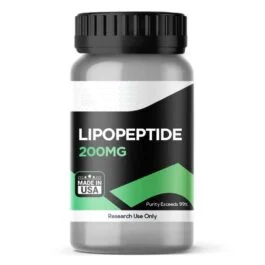
Lipopeptide (200mg)
£203.30
Size: 10mg
Contents: Lipopeptide (Pal-GQPR)
Form: Lyophilized Powder
Purity: >99%
SKU: P-PALGQPR
FREE Shipping on £200+ orders (UK only)
Lipopeptide (Pal-GQPR) is a palmitoylated IgG-derived research peptide widely studied in skin biology, extracellular matrix support, photoaging, inflammation pathways, and dermal repair research models.
Buy Lipopeptide Pal-GQPR UK | Palmitoyl Tetrapeptide Peptide
Buy Lipopeptide Pal-GQPR UK, also known as Palmitoyl Gly-Gln-Pro-Arg, is a high-purity synthetic research peptide supplied by Peptide House UK for laboratory research purposes only. Researchers frequently study this compound because it combines an IgG-derived peptide fragment with palmitoylation technology, which may enhance membrane interaction in experimental skin models.
As interest in advanced skin research continues to grow, many laboratories investigate Lipopeptide (Pal-GQPR) for its potential involvement in extracellular matrix support, skin barrier function, inflammatory signalling pathways, and dermal remodelling processes.
Why Researchers Choose Lipopeptide (Pal-GQPR)
Researchers select Lipopeptide because it offers a unique combination of immune-derived peptide biology and enhanced lipid affinity. Consequently, it has become a popular compound in skin ageing, photoaging, and tissue structure research.
Furthermore, its palmitoylated structure allows researchers to investigate peptide-membrane interactions in greater detail while exploring skin-conditioning and extracellular matrix pathways.
- Extracellular matrix research
- Skin barrier function studies
- Photoaged skin models
- Dermal repair investigations
- Inflammatory signalling research
- Anti-ageing peptide studies
Mechanism of Research Interest
Researchers primarily investigate Lipopeptide (Pal-GQPR) for its role in extracellular matrix organisation and skin structure maintenance. In addition, studies explore its influence on dermal protein expression and inflammatory response pathways.
Because the peptide originates from an immunoglobulin G fragment, researchers also examine how it may interact with immune-related signalling mechanisms within skin tissue models.
- Extracellular matrix remodelling studies
- Skin barrier integrity research
- Dermal protein expression analysis
- Inflammatory signalling investigations
Key Research Applications
1. Skin Structure & Extracellular Matrix Research
Lipopeptide is widely studied for its potential relationship with key structural proteins that support skin architecture. For example, researchers analyse its effects on laminin, collagen VII, and fibroblast-associated matrix proteins.
Moreover, these structural components contribute to skin firmness, elasticity, and dermal cohesion, making this peptide highly relevant in advanced skin biology research.
- Laminin IV and V studies
- Collagen VII investigations
- Fibroblast-related protein research
- Dermal support pathway analysis
2. Inflammation & Skin Conditioning Studies
Researchers frequently investigate Lipopeptide in models involving inflammatory signalling and skin resilience. In particular, studies explore its relationship with cytokine activity and post-stress recovery pathways.
Additionally, research has examined its potential association with IL-6 regulation in environmentally stressed skin models.
- Inflammatory signalling research
- Skin resilience investigations
- Barrier repair studies
- Environmental stress response models
3. Photoaging Research
Photoaged skin remains a major area of interest for peptide researchers. Therefore, Lipopeptide is commonly studied in experimental models involving UV-related skin changes and long-term structural decline.
Researchers analyse markers such as fibrillin-1 and dermal density to better understand structural recovery mechanisms within ageing skin tissues.
- Photoaging research models
- UV-stress response studies
- Wrinkle-related investigations
- Dermal density assessments
4. Dermal Repair Biomarker Research
Researchers also use Lipopeptide to study biomarkers associated with dermal regeneration and tissue remodelling. Consequently, fibrillin-1 has become a key focus within many experimental protocols.
Furthermore, studies investigate how extracellular matrix reinforcement contributes to structural recovery in ageing skin models.
- Fibrillin-1 pathway studies
- Dermal regeneration research
- Extracellular matrix reinforcement models
- Structural recovery investigations
Chemical Profile
- Molecular Formula: C38H68N6O8
- Molecular Weight: 736.9 g/mol
- Sequence: Pal-Gly-Gln-Pro-Arg
- Alternative Names: Pal-GQPR, Palmitoyl Tetrapeptide
Internal Research Clusters
To strengthen topical relevance and improve research continuity, Lipopeptide (Pal-GQPR) is frequently connected with other skin and anti-ageing research peptides.
Anti-Ageing & Skin Research Cluster
- Acetyl Hexapeptide-3 (Argireline)
- SNAP-8 Peptide
- Matrixyl Peptide
- GHK-Cu Peptide
- Anti-Ageing & Skin Peptides
Collagen & Extracellular Matrix Cluster
- Collagen Remodelling Peptides Guide
- Extracellular Matrix Research
- Photoaging Peptides Research Guide
Skin Recovery Cluster
Why Buy from Peptide House UK?
- Premium research-grade peptides
- High-purity manufacturing standards
- Strict quality control procedures
- Secure UK shipping and checkout
- Trusted UK peptide supplier
- Consistent batch-to-batch quality
Important Notice
Lipopeptide (Pal-GQPR) is supplied strictly for laboratory and scientific research purposes only. It is not intended for human consumption, therapeutic use, or diagnostic applications.
Peptide House UK supplies research compounds exclusively for qualified laboratory environments and scientific investigations.
Related products
Cognitive & Nootropic Peptides
Anti-Ageing Peptides UK
Healing & Recovery Peptides
Anti-Ageing Peptides UK
Muscle Growth & Performance Peptides
Anti-Ageing Peptides UK
Anti-Ageing Peptides UK
Anti-Ageing Peptides UK