
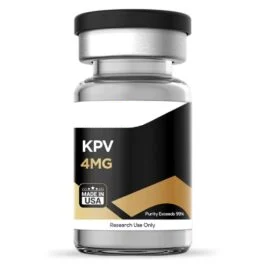
KPV (4mg)
£36.10
Size: 10mg
Contents: KPV (Lys-Pro-Val)
Form: Lyophilized powder
Purity: >99%
SKU: P-KPV
FREE Shipping on £200+ orders
KPV is a synthetic tripeptide derived from the active region of alpha-melanocyte-stimulating hormone (α-MSH). Researchers widely study it in models involving inflammatory pathways, immune response regulation, gut health, tissue repair, and cellular recovery mechanisms.
Buy KPV Peptide UK | Premium KPV Research Peptide
Buy KPV Peptide UK, a high-purity synthetic tripeptide derived from alpha-melanocyte-stimulating hormone (α-MSH). At Peptide House UK, we supply KPV strictly for laboratory research purposes, allowing researchers to investigate inflammation pathways, immune regulation, tissue recovery, and cellular repair mechanisms.
Because KPV contains the active Lys-Pro-Val sequence associated with several biological activities of α-MSH, researchers frequently use it in studies focused on inflammatory signalling and regenerative biology. Furthermore, its compact structure makes it particularly attractive for targeted research applications.
Why Researchers Choose KPV
Researchers continue to study KPV because it offers a focused approach to investigating inflammatory responses at the cellular level. In addition, its small molecular size allows researchers to explore highly specific biological pathways without the complexity of larger peptide structures.
Moreover, KPV remains one of the most widely discussed peptides within inflammation-focused research due to its broad relevance across gut, skin, and tissue recovery models.
- Inflammatory signalling pathway research
- Immune response investigations
- Gut health and intestinal studies
- Tissue repair and regeneration models
- Skin recovery research applications
- Cellular resilience investigations
Mechanism of Action
Researchers investigate KPV for its potential influence on inflammatory signalling pathways. Specifically, studies suggest it may interact with cellular mechanisms involved in cytokine regulation and immune response activity.
Additionally, researchers explore its relationship with peptide transport systems such as PepT1, which may contribute to cellular uptake and localised activity in experimental models.
- Inflammatory cytokine pathway research
- Immune cell signalling investigations
- PepT1 transporter studies
- Cellular inflammatory response models
Key Research Applications
1. Gut Health & Intestinal Research
KPV is widely studied in intestinal research models. For example, researchers investigate how it may influence inflammatory activity within intestinal tissues and mucosal barrier systems.
Furthermore, experimental studies often explore its potential role in supporting tissue integrity during inflammation-related investigations.
- Intestinal inflammation studies
- Mucosal barrier research
- Digestive tissue recovery models
- Gut immune response investigations
2. Immune Modulation Research
Researchers frequently utilise KPV in immune response studies because it allows investigation of cellular inflammatory regulation mechanisms.
Consequently, it has become an important compound in research exploring communication between inflammatory mediators and immune cells.
- Immune signalling pathway studies
- Inflammatory mediator research
- Cellular stress response investigations
- Immune regulation models
3. Tissue Repair & Recovery Research
KPV is also widely investigated in tissue repair models. In these studies, researchers examine cellular recovery processes, epithelial repair pathways, and regeneration-related mechanisms.
Moreover, researchers continue exploring its relevance in wound-healing environments where inflammatory control plays a significant role.
- Epithelial recovery studies
- Tissue regeneration models
- Cellular repair investigations
- Recovery-focused research systems
4. Skin Recovery & Regeneration Studies
Researchers also investigate KPV in skin biology research. Specifically, studies focus on skin recovery processes, inflammatory regulation, and scar-related pathways.
As a result, KPV is frequently associated with broader dermal regeneration and skin repair research programmes.
- Skin recovery research
- Dermal regeneration studies
- Scar formation investigations
- Inflammatory skin pathway models
5. Systemic Inflammation Research
Beyond localised models, researchers also study KPV within broader inflammation-focused investigations. Therefore, it remains relevant in studies examining systemic inflammatory responses and cellular signalling networks.
- Systemic inflammation studies
- Cellular signalling research
- Inflammatory cascade investigations
- Recovery pathway analysis
Chemical Profile
- Molecular Formula: C16H30N4O4
- Molecular Weight: 342.43 g/mol
- Sequence: Lys-Pro-Val (KPV)
- Alternative Names: α-MSH (11-13), ACTH (11-13), MSH Fragment
Internal Research Clusters
Researchers often study KPV alongside other peptides involved in inflammation, tissue recovery, gut health, and cellular repair pathways. Therefore, it naturally fits within several related peptide research categories.
Healing & Recovery Cluster
Gut Health Research Cluster
Skin Recovery Cluster
Why Buy KPV from Peptide House UK?
- Research-grade peptide quality
- High-purity manufacturing standards
- Strict batch quality control
- Secure UK shipping
- Trusted UK peptide supplier
- Reliable product consistency
Important Notice
KPV is supplied strictly for laboratory and scientific research purposes only. It is not intended for human consumption, medical use, or diagnostic applications.
At Peptide House UK, we maintain strict quality standards to support researchers seeking reliable peptide compounds for advanced scientific investigations.
Related products
Muscle Growth & Performance Peptides

Healing & Recovery Peptides
Hormonal & Signaling Peptides
Muscle Growth & Performance Peptides
Anti-Ageing Peptides UK
Anti-Ageing Peptides UK
Muscle Growth & Performance Peptides
Muscle Growth & Performance Peptides