
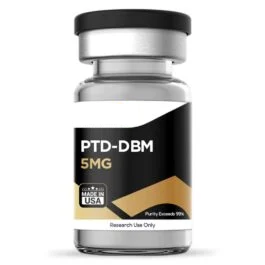
PTD-DBM (5mg)


£80.55
Size: 10mg
Contents: PTD-DBM (Protein Transduction Domain-Fused Dishevelled Binding Motif)
Form: Lyophilized Powder
Purity: >99%
SKU: P-PTDDBM
FREE Shipping on £200+ orders
PTD-DBM is a synthetic research peptide widely studied for its role in Wnt/β-catenin signalling, hair follicle regeneration, stem cell activation, and tissue repair research. Researchers frequently investigate PTD-DBM in models involving hair growth pathways, follicle neogenesis, wound healing, and regenerative biology.
Buy PTD-DBM Peptide UK | Hair Growth & Wnt Signalling Peptide
Buy PTD-DBM Peptide UK (Protein Transduction Domain-Fused Dishevelled Binding Motif), an advanced research peptide supplied by Peptide House UK for laboratory research purposes only. Researchers widely study this peptide because it targets one of the most important signalling pathways involved in hair follicle development, tissue regeneration, and stem cell activation.
Unlike traditional hair research compounds that focus on downstream pathways, PTD-DBM directly targets the interaction between CXXC5 and Dishevelled (Dvl). Consequently, researchers use it to investigate how Wnt/β-catenin signalling influences follicle regeneration and tissue growth.
Why Researchers Choose PTD-DBM
Researchers frequently select PTD-DBM because it offers a highly targeted approach to studying regenerative signalling pathways. Furthermore, its unique mechanism allows scientists to examine how cells transition from inactive states into active growth phases.
In addition, PTD-DBM has become increasingly important in experimental models involving hair follicle biology, stem cell activation, and tissue regeneration research.
- Hair follicle regeneration studies
- Wnt/β-catenin signalling research
- Stem cell activation models
- Tissue repair investigations
- Regenerative biology research
- Follicle neogenesis studies
Mechanism of Action (Research Context)
PTD-DBM is studied for its ability to disrupt the interaction between CXXC5 and Dishevelled (Dvl). Normally, CXXC5 acts as a negative regulator of Wnt signalling. However, PTD-DBM prevents this inhibitory interaction.
As a result, researchers observe increased β-catenin activity in experimental models. Consequently, this signalling pathway may support cellular proliferation, follicle development, and regenerative processes.
- Disrupts CXXC5-Dvl interaction
- Promotes Wnt/β-catenin pathway activation
- Supports stem cell signalling research
- Enhances regenerative pathway investigations
Key Research Applications
1. Hair Follicle Regeneration Research
PTD-DBM is primarily studied in hair follicle regeneration models. Researchers investigate how Wnt pathway activation influences follicle growth, development, and cycling behaviour.
Moreover, studies frequently examine its potential role in promoting the anagen growth phase, which is the active stage of follicle development.
- Hair growth pathway studies
- Follicle activation research
- Anagen phase investigations
- Hair cycle regulation models
2. Wound-Induced Hair Follicle Neogenesis (WIHN)
Researchers also investigate PTD-DBM in models of wound-induced hair follicle neogenesis. In these studies, scientists analyse how new follicle formation may occur during tissue repair processes.
Therefore, PTD-DBM remains a highly relevant compound in advanced regenerative biology research.
- Follicle neogenesis models
- Skin regeneration studies
- Tissue recovery investigations
- Stem cell activation research
3. Tissue Repair & Regenerative Biology
Beyond hair research, PTD-DBM is widely studied for its involvement in tissue regeneration pathways. Researchers examine how Wnt signalling influences fibroblast activity, collagen organisation, and wound healing responses.
Furthermore, these pathways play critical roles in cellular repair and structural tissue remodelling.
- Fibroblast activity studies
- Collagen deposition research
- Wound healing investigations
- Tissue remodelling models
4. Bone Formation Research
Researchers continue exploring PTD-DBM in bone regeneration studies because Wnt signalling is closely linked to osteoblast activity and skeletal development.
Consequently, PTD-DBM may provide valuable insights into bone formation pathways and regenerative tissue engineering models.
- Bone regeneration research
- Osteoblast signalling studies
- Skeletal development models
- Regenerative engineering investigations
Chemical Profile
- Molecular Formula: C124H223N61O28S2
- Molecular Weight: 3080.7 g/mol
- Alternative Names: Protein Transduction Domain-Fused DBM, Hair Growth Peptide
Scientific Significance
PTD-DBM stands out because it targets a central regulatory mechanism within the Wnt signalling pathway. Therefore, researchers use it to investigate regenerative processes that extend beyond hair biology.
In addition, its ability to influence cellular signalling pathways makes it valuable for studies involving stem cells, tissue repair, and regenerative medicine research models.
Related Research Peptide Clusters
Researchers frequently combine PTD-DBM within broader regenerative and hair biology research programmes. Consequently, it is often linked to complementary peptide categories and signalling pathway studies.
Hair Growth Research Cluster
- GHK-Cu Peptide
- TB-500 Peptide
- Hair Growth Peptides
Regeneration & Recovery Cluster
Cellular Health & Longevity Cluster
Why Buy from Peptide House UK?
- Premium research-grade peptides
- High-purity manufacturing standards
- Strict quality control procedures
- Secure UK shipping and checkout
- Trusted UK peptide supplier
- Consistent batch-to-batch quality
Important Notice
PTD-DBM is supplied strictly for laboratory and scientific research purposes only. It is not intended for human consumption, medical use, veterinary use, or diagnostic applications.
Peptide House UK supplies PTD-DBM exclusively for qualified research environments and experimental investigations.
Related products

Anti-Ageing Peptides UK

Hormonal & Signaling Peptides

Muscle Growth & Performance Peptides

Anti-Ageing Peptides UK
Cognitive & Nootropic Peptides

Longevity & Cellular Health
Healing & Recovery Peptides
Longevity & Cellular Health