
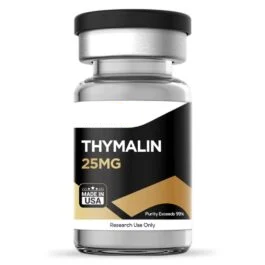
Thymalin (25mg)
£125.10
Size: 10mg
Contents: Thymalin
Form: Lyophilized Powder
Purity: >99%
SKU: P-THYMALIN
FREE Shipping on £200+ orders
Thymalin is a naturally derived thymic peptide widely studied in laboratory research involving immune regulation, T-cell differentiation, cytokine signalling, healthy ageing, and longevity-related biological pathways.
Buy Thymalin Peptide UK | Natural Thymic Research Peptide
Buy Thymalin Peptide UK, a naturally derived thymic peptide supplied by Peptide House UK exclusively for laboratory research purposes. Researchers widely study this peptide because of its involvement in immune regulation, T-cell differentiation, cytokine signalling, and age-related biological processes.
Unlike many synthetic thymic peptides, Thymalin originates from naturally occurring thymus-derived peptide complexes. Therefore, researchers frequently investigate its broader role in immune system function, antioxidant defence mechanisms, and cellular ageing pathways.
Why Researchers Choose Thymalin
Researchers often select Thymalin because it provides a valuable model for studying thymic function and immune system regulation. In addition, it has attracted growing interest in longevity and geroprotective research due to its association with healthy ageing pathways.
Furthermore, Thymalin continues to be investigated across multiple areas of biological research, making it one of the most versatile thymic peptides available.
- Immune system research
- T-cell differentiation studies
- Cytokine signalling investigations
- Healthy ageing research
- Longevity and geroprotection models
- Antioxidant response pathways
How Thymalin Works (Research Context)
Researchers study Thymalin for its ability to influence thymic activity and immune cell development. Specifically, it is investigated for its role in supporting T-cell maturation and maintaining balanced immune responses.
Additionally, studies suggest that Thymalin may influence cytokine production and antioxidant defence systems. As a result, researchers frequently include it in models focused on immune resilience, cellular protection, and age-related immune decline.
- T-cell development research
- Immune signalling pathway studies
- Cytokine regulation models
- Cellular antioxidant investigations
Key Research Applications
1. Immune Regulation Research
Immune regulation remains one of the most studied areas for Thymalin. Researchers investigate how it may influence lymphocyte activity, T-cell differentiation, and cytokine signalling pathways.
Consequently, Thymalin is frequently used in experimental models designed to explore adaptive immunity and immune system balance.
- T-cell maturation studies
- Lymphocyte activity research
- Adaptive immunity investigations
- Immune resilience models
2. Healthy Ageing & Longevity Research
Researchers continue to explore Thymalin in healthy ageing studies because immune function naturally declines with age. Therefore, scientists investigate its potential relationship with age-associated biological processes.
Moreover, several studies have examined its relevance in geroprotective research models involving immune health and cellular function.
- Longevity pathway studies
- Age-related immune decline research
- Geroprotection models
- Cellular ageing investigations
3. Viral Defence Research
Researchers also study Thymalin in models involving antiviral immune responses. In particular, investigations focus on cytokines associated with immune communication and defence mechanisms.
As a result, Thymalin remains relevant in broader immune-response research environments.
- Cytokine signalling studies
- Immune activation research
- Antiviral response models
- Immune communication pathways
4. Metabolic & Oxidative Stress Research
Thymalin has also attracted interest in metabolic and oxidative stress research. Researchers investigate how immune regulation may interact with antioxidant activity and cellular stability.
Furthermore, studies continue exploring potential relationships between immune health, metabolic balance, and oxidative stress responses.
- Oxidative stress investigations
- Cellular protection models
- Metabolic regulation research
- Antioxidant pathway studies
5. Immune Surveillance Research
Researchers investigate Thymalin in studies focused on immune surveillance and cellular defence mechanisms. Consequently, it is often included in experimental models examining immune system efficiency and long-term biological resilience.
- Immune surveillance studies
- Cellular defence research
- Immune monitoring pathways
- Biological resilience investigations
Chemical Profile
- Molecular Formula: C33H54N12O15
- Molecular Weight: 858.86 g/mol
- Alternative Names: Thymic Factor, Thymulin
- Peptide Type: Natural Thymic Peptide
Internal Research Clusters
To strengthen topical relevance and support advanced peptide research pathways, Thymalin is commonly studied alongside other immune and longevity-focused compounds.
Immune Support Peptide Cluster
- Thymogen Peptide
- Vilon Peptide
- Immune Support Peptides
Longevity & Cellular Health Cluster
Immune Research Content Cluster
Why Buy from Peptide House UK?
- Premium research-grade peptides
- High-purity peptide synthesis
- Strict quality control procedures
- Secure UK checkout and shipping
- Trusted UK peptide supplier
- Consistent batch-to-batch quality
Important Notice
Thymalin is supplied strictly for laboratory and scientific research purposes only. It is not intended for human consumption, medical use, therapeutic use, or diagnostic applications.
At Peptide House UK, we maintain strict quality standards to support reliable research outcomes and consistent laboratory performance.
Related products
Longevity & Cellular Health
Longevity & Cellular Health
Anti-Ageing Peptides UK
Longevity & Cellular Health
Longevity & Cellular Health
Longevity & Cellular Health
Longevity & Cellular Health
Longevity & Cellular Health