
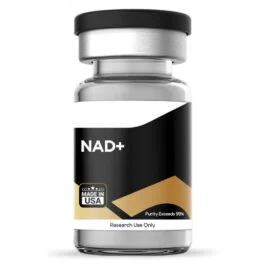
NAD+ (100mg / 250mg / 750mg)

Price range: £44.65 through £277.40
Size: 500mg (adjust if different)
Contents: NAD+ (Nicotinamide Adenine Dinucleotide)
Form: Lyophilized powder
Purity: >99%
SKU: P-NADPLUS
FREE Shipping on £200+ orders
NAD+ (Nicotinamide Adenine Dinucleotide) is a naturally occurring coenzyme widely studied in cellular energy production, mitochondrial function, DNA repair, metabolic regulation, and longevity research. It plays a central role in numerous biological processes that support cellular resilience and metabolic efficiency.
Buy NAD+ UK | Nicotinamide Adenine Dinucleotide Research Compound
Buy NAD+ UK (Nicotinamide Adenine Dinucleotide) a high-purity research compound supplied by Peptide House UK for laboratory research purposes only. Researchers widely study NAD+ because it plays a fundamental role in cellular energy production, metabolic regulation, mitochondrial activity, and DNA repair mechanisms.
Importantly, NAD+ exists naturally in every living cell and participates in hundreds of biological reactions. Therefore, it remains one of the most extensively researched molecules in modern longevity, metabolism, and cellular health studies.
Why Researchers Choose NAD+
Researchers frequently select NAD+ because it supports critical biochemical pathways responsible for energy generation and cellular maintenance. In addition, it serves as a key coenzyme in processes that influence metabolic efficiency and cellular resilience.
Furthermore, scientific interest in NAD+ continues to grow due to its close relationship with mitochondrial function, sirtuin activity, and healthy ageing research.
- Cellular energy production studies
- Mitochondrial function research
- DNA repair pathway investigations
- Metabolic health studies
- Longevity and cellular resilience research
Mechanism of Action (Research Context)
NAD+ functions as a coenzyme that transfers electrons during cellular metabolic reactions. As a result, it helps convert nutrients into usable cellular energy through pathways such as glycolysis and the citric acid cycle.
Additionally, NAD+ cycles between its oxidised form (NAD+) and reduced form (NADH), allowing cells to generate ATP efficiently. Consequently, researchers often investigate NAD+ in studies involving energy metabolism and cellular performance.
- ATP production pathways
- Redox reaction research
- Cellular metabolism studies
- Mitochondrial energy generation
Key Research Applications
1. Longevity & Cellular Health Research
NAD+ is closely associated with cellular longevity research because it supports enzymes involved in maintaining cellular function. For example, researchers study its relationship with sirtuins, which influence mitochondrial performance and cellular adaptation.
Moreover, NAD+ levels naturally decline with age, which has increased scientific interest in its role within healthy ageing models.
- Cellular ageing studies
- Sirtuin activation research
- Mitochondrial resilience models
- Cellular adaptation investigations
2. Mitochondrial Function Research
Researchers frequently investigate NAD+ in studies involving mitochondrial performance because mitochondria generate most of the cell’s energy supply. Therefore, maintaining adequate NAD+ availability remains an important area of metabolic research.
Furthermore, experimental models suggest that increased NAD+ availability may support mitochondrial respiration and energy utilisation.
- Mitochondrial efficiency studies
- ATP production research
- Energy metabolism investigations
- Cellular respiration models
3. DNA Repair & Cellular Stress Research
NAD+ also plays a significant role in DNA repair pathways. Specifically, researchers examine how it supports PARP enzymes that help cells respond to genetic damage and oxidative stress.
As a result, NAD+ is commonly studied in laboratory models focused on cellular recovery and genome stability.
- DNA repair research
- PARP enzyme investigations
- Oxidative stress models
- Genome stability studies
4. Metabolic Health Research
Researchers continue exploring NAD+ in metabolic health studies because it influences numerous pathways related to nutrient utilisation and energy balance.
In addition, experimental models investigate its potential relationship with physical performance, metabolic flexibility, and cellular energy output.
- Metabolic regulation studies
- Nutrient utilisation research
- Cellular energy models
- Metabolic efficiency investigations
5. Liver, Kidney & Cellular Protection Studies
NAD+ is also studied in organ-specific research models involving liver and kidney function. Researchers examine how it may help cells respond to metabolic stress and environmental challenges.
Consequently, NAD+ remains relevant in broader investigations of cellular protection and biological resilience.
- Liver function research
- Kidney health studies
- Cellular stress response models
- Protective metabolic pathway investigations
Chemical Profile
- Molecular Formula: C21H27N7O14P2
- Molecular Weight: 663.43 g/mol
- Alternative Name: Nicotinamide Adenine Dinucleotide
Internal Research Clusters
To strengthen topical relevance and support advanced research navigation, NAD+ is commonly linked with longevity, mitochondrial health, and metabolic research compounds.
Longevity & Cellular Health Cluster
- NMN (Nicotinamide Mononucleotide)
- Epitalon
- MOTS-c
- Longevity & Cellular Health Peptides
Mitochondrial Function Cluster
Metabolic Research Cluster
- AOD-9604
- 5-Amino-1MQ
- Metabolic & Wellness Peptides
DNA Repair & Cellular Recovery Cluster
Why Buy NAD+ from Peptide House UK?
- High-purity research-grade NAD+
- Strict quality control standards
- Secure UK shipping and checkout
- Trusted UK peptide supplier
- Consistent batch quality
- Designed for advanced laboratory research
Important Notice
NAD+ is supplied strictly for laboratory and scientific research purposes only. It is not intended for human consumption, medical use, or diagnostic applications.
At Peptide House UK, we maintain rigorous quality standards to support reliable and consistent research outcomes.
| Choose | 100mg, 250mg, 750mg |
|---|
Related products
Hormonal & Signaling Peptides
Longevity & Cellular Health
Anti-Ageing Peptides UK
Longevity & Cellular Health
Longevity & Cellular Health
Longevity & Cellular Health
Longevity & Cellular Health
Longevity & Cellular Health